
Rifle Ammo Explained: Picking the Right Rounds for Your Gun
Have you ever wondered what makes rifle ammo truly perform when it matters most? At its core, rifle ammo is a precision-engineered package of primer, propellant, and bullet, working together in a fraction of a second to deliver consistent velocity and accuracy. By choosing the right bullet weight and type for your specific rifle and distance, you can transform an ordinary shot into a controlled, dependable strike. The key to confident, clean shooting lies in understanding how your ammo’s ballistic profile behaves, so you can trust it every time you squeeze the trigger.
Understanding the Basics of Cartridge Construction
A rifle cartridge is a single, self-contained unit, and understanding its construction means seeing it as four distinct parts working in concert. The case, typically brass, is the foundation; its internal volume and shoulder angle dictate powder capacity and pressure behavior. Seated firmly in the case mouth is the bullet, while the primer sits in the pocket at the case head, and the propellant fills the space between. When you finger a loaded round, feel the crimp holding the bullet—that’s your first tactile lesson. A cartridge’s overall length, measured from base to bullet tip, determines how it feeds from the magazine and engages the rifling.
Getting this length wrong—even by a few thousandths—can spike pressure or ruin accuracy, making it the most critical hand-loaded dimension.
These basics are the grammar you need before ever reading a reloading manual, because every ballistic choice you make later is just a variation on this four-piece system.
What’s Inside the Brass, Primer, Powder, and Projectile
The brass case houses all components and anchors the cartridge construction; its .260 Remington Ammo for Sale primer pocket and flash hole direct ignition. Inside the primer, a shock-sensitive compound sits beneath the anvil, detonating upon striker impact to channel flame through the flash hole. The powder charge—typically extruded or spherical propellant—burns progressively, converting solid grains into high-pressure gas. The projectile, seated at the case mouth, consists of a lead core wrapped in a copper jacket; its weight and profile dictate ballistic behavior. Primer sensitivity and powder burn rate directly influence pressure curves, while case wall thickness determines chamber sealing and extraction reliability.
How Bullet Weight and Grain Affect Downrange Performance
In rifle ammo, bullet weight, measured in grains, directly dictates time of flight and trajectory. A heavier bullet, such as a 175-grain .308, typically retains velocity better downrange, resisting wind drift and dropping less at extended 6mm Creedmoor Ammo for Sale distances compared to a lighter 155-grain load at the same muzzle velocity. Conversely, lighter projectiles offer flatter initial trajectories due to higher speed but shed energy faster, making them more susceptible to crosswinds beyond 300 yards. Bullet weight and grain affect downrange performance through sectional density and ballistic coefficient, which determine how efficiently the projectile overcomes air resistance. Selecting the correct grain weight is a balance between recoil, external ballistics, and terminal effect on target.

- Heavier grains maintain more downrange energy for deep penetration on game.
- Lighter grains produce flatter short-range trajectories, ideal for varmints.
- Higher ballistic coefficient in heavy-for-caliber bullets reduces wind drift.
Jacketed vs. Lead-Tipped Options for Cleaner Feeding
For reliable cycling in semi-automatic rifles, jacketed bullets with a fully encapsulated base significantly reduce feeding failures compared to exposed-lead tips. Lead-tipped flat points can catch on feed ramps, shaving metal and causing jams, while full metal jacket (FMJ) profiles with a smooth ogive glide more consistently from magazine to chamber. Soft-point lead tips may deform under recoil pressure in the magazine, altering the cartridge’s overall length and impeding the next round’s upward travel. Jacketed options, especially with a tapered boat-tail, concentrate weight rearward, enhancing ballistic coefficient and feeding reliability under rapid fire. However, for .223 Ammo for Sale tubular magazines, flat-nosed lead-tipped cartridges are intentionally designed to prevent chain detonation—jacketed spitzers are unsafe there.
Question: Should I choose jacketed or lead-tipped ammunition for a semi-auto hunting rifle?
Choose jacketed (e.g., bonded or partition) for dependable feeding in any semi-auto platform. Lead-tipped rounds risk tip deformation and ramp snags, but if your rifle has a controlled-round feed action, a soft point can still function—yet jacketed remain the safer default for jam-free operation.
Matching the Right Load to Your Rifle’s Purpose
Matching the right .243 Ammo for Sale load to your rifle’s purpose begins with defining the job—hunting, precision target, or defensive use. For hunting, choose a bullet that expands reliably at your expected impact velocity, such as a bonded soft point for tough game or a monolithic copper for deep penetration. A precision rifle demands a consistent, match-grade projectile with a high ballistic coefficient, tuned to your barrel’s optimal twist rate, which you confirm through a ladder test. If you’re running a short-barreled carbine, a lighter, faster load minimizes drop and wind drift, while a long-range rig benefits from heavy, slow-burning powders. Selecting the correct rifle ammo isn’t about the most powerful cartridge, but the one that cycles, groups, and performs flawlessly in your specific barrel. Matching the right load also means verifying that your chosen round’s pressure and recoil suit your shooting platform’s gas system and stock ergonomics.
Choosing Between Full Metal Jacket and Hollow Point for Target vs. Hunting

For rifle ammo selection, match the bullet type to the terminal goal. Full metal jacket (FMJ) rounds feature a copper shell over a lead core, resisting deformation on impact. This makes them ideal for target practice, as they punch clean holes in paper or steel without excessive fragmentation, and their lower cost allows for high-volume shooting. Hollow points, conversely, expand upon hitting soft tissue, transferring energy rapidly. This expansion makes them the superior choice for hunting medium or large game, ensuring a quick, ethical kill. For a clear sequence: first, identify your intended target; second, if it’s inanimate, choose FMJ; third, if it’s living game, choose hollow point ammunition.
Selecting the Optimal Bullet Shape for Ballistic Coefficient and Wind Drift
When selecting the optimal bullet shape for ballistic coefficient and wind drift, prioritize a sleek, high-secant ogive design with a long boattail. This geometry delays transonic instability and reduces drag, directly lowering drift. Compare a 140gr VLD against a 140gr flat-base: the former sheds velocity slower, needing roughly 30% less wind hold at 800 meters. However, match shape to twist rate—fast 1:8 twists stabilize longer, high-BC projectiles, while slower 1:12 barrels may require lighter, shorter tips. For extreme range, opt for a continuous-radius tangent ogive if throat erosion is a concern; it retains BC with slight accuracy loss. Always verify shape against your barrel’s freebore, as 9x23mm Winchester Ammo for Sale overly long bullets jam magazines or touch lands prematurely.
| Bullet Shape | BC Trend | Wind Drift Impact |
|---|---|---|
| Flat-base spitzer | Lower | Higher drift |
| Boattail VLD | Higher | Reduced drift |
| Tangent ogive | Moderate | Consistent, moderate drift |
Understanding Muzzle Velocity and Energy Transfer for Ethical Shots
Understanding muzzle velocity and energy transfer begins with matching bullet construction to impact speed. At close range, high-velocity rounds like a .243 pushing 3,000+ fps demand a bonded or monolithic bullet to prevent fragmentation before deep penetration. Conversely, low-velocity, heavy-for-caliber loads rely on energy transfer through controlled expansion, not speed. For ethical shots, you must calculate your rifle’s retained energy at your maximum intended distance—typically aiming for at least 1,000 ft-lbs for deer-sized game. Ethical shot placement under 200 yards often favors faster, flatter trajectories, but beyond that, bullet design and sectional density outweigh sheer velocity. A practical sequence: confirm muzzle velocity with a chronograph, compute energy at target range, then select a bullet that 7.62 Tokarev Ammo for Sale expands between 1.5–2x its diameter while retaining 60%+ weight. Only then does your load guarantee a swift, humane kill.

Practical Tips for Storing and Handling Your Stockpile
Keep your rifle ammo in a sealed ammo can with a silica gel pack to block 6mm ARC Ammo for Sale humidity, and store it off a concrete floor in a cool, dry closet—temperature swings cause condensation that rusts cases. Rotate your stockpile by shooting the oldest boxes first, and always label cans with the load and purchase date. Never lube cartridges or wipe them with oily rags, as this can kill primers and attract dust. When handling, avoid dropping rounds or letting them jostle violently, which can set bullets deeper and spike pressure. Question: How do I know if my stored ammo is still good? Answer: Check for green corrosion on brass, loose bullets, or flattened primers—if it passes a visual and a light tug test, it’s likely fine, but when in doubt, pull it apart for components.
Keeping Powder Dry and Primers Stable in Humidity and Temperature Swings
Your rifle ammo’s powder and primers are the first casualties of moisture and thermal rollercoasters. Store loaded rounds in a sealed, hard-sided case with desiccant packs, then place that case inside a larger airtight tote—double barriers keep humidity below 30% even when the garage swings 40°F overnight. Avoid attic or basement extremes; instead, choose a closet with stable ambient temps. Rapid temperature shifts cause condensation inside the case, so let ammo acclimate before opening the seal. For bulk powder, keep the original jug and add oxygen absorbers, never transferring to glass. Rotate stock seasonally, and stabilize primer sensitivity by storing rounds upright to minimize thermal contact with cold floors.

- Use rechargeable desiccant packs and regenerate them monthly.
- Mark the case with a hygrometer to monitor humidity creep.
- Never leave ammo in a vehicle—heat spikes degrade primer compound fast.
Rotating Your Inventory to Avoid Corrosion and Deterioration
Rotating your inventory is a preventive measure against propellant degradation and primer seal fatigue, not just a stock-management habit. Because rifle ammo’s copper and brass components react to humidity over time, the oldest rounds in your storage container should be cycled to the top or front, ensuring they are fired or relocated before newer batches. This first-in, first-out method directly reduces the risk of corrosion forming on case mouths and primers, which can obstruct chambering or cause misfires. Additionally, rotating forces you to periodically inspect seals and desiccant packs, catching early oxidation before it spreads. By prioritizing age over convenience, you preserve ballistic consistency and avoid discarding rounds that have become unsafe through prolonged exposure.
How often should you rotate rifle ammo to prevent corrosion? At least every six months, especially in humid climates, and always after any seasonal temperature shift that might have caused condensation inside your safe or ammo can.
Ammo Can Organization: Labeling by Caliber, Lot Number, and Purchase Date
When organizing rifle ammo, labeling by caliber, lot number, and purchase date on each ammo can is .22-250 Ammo for Sale non-negotiable for maintaining a clear, usable stockpile. Write the caliber in large, permanent marker on the lid’s exterior to prevent dangerous mix-ups at the range. Record the lot number from the factory box—this is critical for tracing any defective batch if you experience a misfire or pressure issue. Also note the purchase date; it helps you rotate oldest ammo first and know when to inspect for corrosion. This system turns vague boxes into precise inventory, saving time and preventing costly errors.
- Use waterproof labels or paint pens to keep markings legible despite humidity.
- Include a small sticker inside the lid duplicating the same details in case the exterior wears off.
- Color-code calibers (e.g., red for .308, blue for 5.56) for instant visual identification across multiple cans.
Common Calibers and Their Best Use Cases Explained
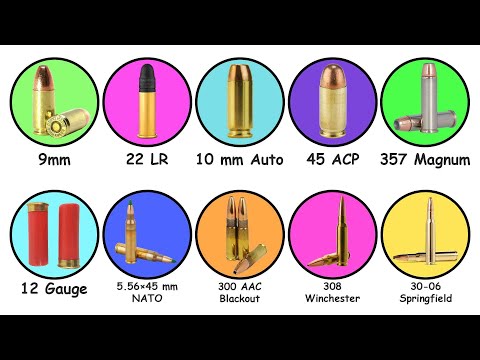
The .22 Long Rifle is ideal for small-game hunting and inexpensive target practice due to its minimal recoil and low cost. For varmints like prairie dogs, the .223 Remington offers flat trajectories and high velocity, making it a top choice for precision shooting at moderate ranges. The .308 Winchester excels as a versatile all-around cartridge, delivering reliable energy for deer-sized game and tactical applications out to 800 yards. For large, dangerous game such as elk or moose, the .30-06 Springfield provides heavier bullet weights and superior stopping power at extended distances. Finally, the .300 Win Mag is best for long-range hunting, retaining lethal energy beyond 1,000 yards, though its significant recoil demands a skilled shooter. Each caliber balances range, power, and shooter comfort for specific roles.
Comparing .223 Remington, .308 Winchester, and 6.5 Creedmoor for Accuracy
When comparing .223 Remington, .308 Winchester, and 6.5 Creedmoor for accuracy, the 6.5 Creedmoor generally offers the best inherent precision due to its high ballistic coefficient and efficient case design, which minimize wind drift and drop at extended ranges. The .308 Winchester, a heavier recoiling round, provides consistent accuracy but suffers from more trajectory arc. The .223 Remington excels in short-range precision with low recoil, yet its lighter bullets struggle beyond 500 yards against wind. For sustained long-range accuracy, 6.5 Creedmoor is the superior choice among these three, while .308 remains reliable for larger targets and .223 for varmint or benchrest shooting.
- 6.5 Creedmoor retains velocity and resists wind better than .308 at 800+ yards.
- .308 Winchester offers tighter groups at closer ranges (under 300 yards) due to less sensitivity to shooter error.
- .223 Remington delivers sub-MOA accuracy with match ammunition but loses precision rapidly past 600 yards.
Short-Action vs. Long-Action Rounds and Magazine Compatibility
Short-action rounds like .308 Win and 6.5 Creedmoor fit standard-length magazines, enabling smoother feeding and faster bolt throw. Long-action cartridges such as .30-06 or 7mm Rem Mag require a longer receiver and correspondingly deeper magazines, which increases overall rifle weight and reduces magazine capacity. You cannot swap these magazines interchangeably—a short-action mag will bind on a long-action cartridge, while a long-action mag in a short receiver creates feeding failures. For hunting or tactical use, short actions offer faster follow-up shots and lighter rifles, while long actions deliver greater case capacity for heavy, high-BC bullets at extended ranges. Choose based on your primary shooting distance and reloading priorities.
- Short-action magazines boost capacity by 2–3 rounds versus long-action.
- Long-action rounds force a longer bolt travel, slowing cycling speed.
- Convertible AICS mags exist only for specific short-action calibers, not long-action.
- Match your magazine to the cartridge’s overall length—never force-fit.
Lighter Recoil Alternatives for Beginners and Youth Shooters
For beginners and youth shooters, lighter recoil alternatives for beginners and youth shooters prioritize .22 LR, .223 Remington, and 6.5 Grendel. Start with .22 LR to master trigger control and sight alignment—its near-zero kick allows high-volume practice. Then, move to .223 Remington in an 18–20 inch barrel with a muzzle brake; this reduces felt recoil to roughly 4–5 ft-lbs, manageable for smaller frames. For a step up in hunting utility, 6.5 Grendel delivers moderate power with about 30% less push than .308, ideal for deer-size game. Choose gas-operated semi-autos over bolt actions, as they spread recoil over a longer impulse.
- Begin with .22 LR for basic marksmanship.
- Transition to a braked .223 for centerfire fundamentals.
- Advance to 6.5 Grendel if a larger game capability is required.
Zeroing Sights and Testing Accuracy with Your Chosen Rounds
Zeroing sights with your chosen rifle ammo demands that you settle on a single lot and bullet weight before adjusting your optic, as point of impact shifts with velocity and ballistic coefficient. Start at 25 yards to confirm a rough grouping, then move to your intended zero distance—typically 100 yards for most cartridges—using a stable rest to isolate shooter error. Fire three-shot groups, adjust your turrets in known click values (often 1/4 MOA or 0.1 mil), and re-shoot until the group’s center matches your aim point. After zeroing, test accuracy by firing five consecutive groups at 100 yards, measuring the extreme spread and mean radius to confirm your ammo’s consistency. Record temperature and altitude, as they alter bullet drop even with the same lot. Consistent cheek weld and trigger control are as critical as the ammo itself for meaningful accuracy testing. Q&A: *Why test multiple groups after zeroing?* Because a single group can mislead—three to five groups reveal true precision and expose flyers from bad rounds or shooter fatigue.
Shooting Groups at 100 Yards to Identify the Most Consistent Lot
To isolate the most consistent lot, fire five consecutive five-shot groups at 100 yards from a solid rest, allowing the barrel to cool between strings. Compare extreme spread and mean radius across all lots; the winner delivers the tightest average group with the least vertical variation, not just one lucky cluster. Lot-to-lot consistency at 100 yards reveals itself through repeatable bullet-to-bullet alignment—if two lots print sub-MOA but one throws a flier per group, reject it. Track wind flags, shoot in calm bulk ammo for sale conditions, and rank lots by total group area, not single best group, to ensure your rifle’s zero holds true under field pressure.
Adjusting Scope Turrets to Compensate for Bullet Drop and Windage
After confirming a solid zero, adjusting scope turrets for bullet drop and windage turns your reticle into a precise ballistic calculator. For each distance, dial the elevation turret in minutes of angle (MOA) or miliradians (mil) to match your specific ammo’s trajectory—record these come-ups from your drop chart. When a crosswind pushes the impact, rotate the windage turret into the wind’s direction, typically 1 click per 0.1 mil per 10 mph at 100 yards, then scale proportionally with distance. Always return to zero after field adjustments to verify clicks track correctly. A simple friction-locked or exposed turret system offers faster corrections than capped versions for dynamic shooting.
Q: How many clicks equal one inch at 100 yards? A: For MOA scopes, four clicks 7.5×55 Swiss Ammo for Sale move impact one inch; for mil scopes, 3.6 clicks do the same—check your turret’s labeled value before dialing.
Using a Chronograph to Verify Velocity Consistency Across Boxes
When zeroing your rifle, don’t just chase a tight group—verify that the velocity consistency across boxes holds up before you trust your drop data. Set your chronograph ten feet from the muzzle and shoot a ten-round string from Box A, then a second string from Box B, ideally on the same temperature and humidity conditions. Compare the extreme spread and standard deviation; a gap over 20 fps between box averages can shift your point of impact by a quarter-inch at 300 yards. If the numbers wobble wildly, reject that lot for long-range work and re-zero with a more uniform batch. This confirms your turret clicks match real-world ballistics, not just paper luck.